How I ended up in Uzbekistan
I ended up in Uzbekistan by chance: in the autumn of 2022 I was due to fly on holiday to South Korea via Tashkent, and I decided to fly to Uzbekistan a couple of weeks early and calmly wait for my flight there.
At the time I was working at Yandex, and my career was uneven: I quickly grew from product manager to head of a group of non-retention products, and then to Chief Revenue Officer of Yandex Services (which I don’t mention on LinkedIn: I only held the role for a couple of months). At the time the service was searching for its model: in the end it went back to the classified model, and part of the team moved to a new project (Yandex Smena, alive and well today).
Back from the holiday, I decided to work from Uzbekistan for a while (thanks to my manager, Nikita Repeshko, for being very reasonable, trusting and understanding). I knew this set-up wouldn’t last long, so after a couple of weeks of remote work I decided to look for a new job abroad.
At about the same time, my Yandex colleague and good friend Nikita Lebedev wrote that a recruiter from LeBazar, a Tashkent service, had approached him.
It was FoodTech, and they were looking for a Head of Product (CPO sounded out of place at the time: there was hardly a product team, or a product, to speak of). The role didn’t suit him for a number of reasons, but I happened to be in Tashkent, so he could recommend me if I was interested.
I thanked Nikita, studied the job description and “tripped over” the requirement for “confident spoken and written English” (I could speak and write it, but I was far from confident). In the end, despite my fear that they would “fail” me in the interview with some language test, I got in touch with the recruiter and arranged a meeting with LeBazar’s CEO, Konstantin Nechaev.
A fun fact: Kostya greeted me with “I’m not going to make you an offer, but I’m always happy to meet new people”. We talked for an hour and a half, after which I texted Nikita something like “spent an hour and a half, even though they told me straight away they wouldn’t make an offer”.
A week later Kostya called and offered me a test task that consisted of no fewer than four parts:
- Work a day or two in a store (picking and delivering orders);
- Analyse a data set and extract insights from it;
- Analyse the customer journey map of the LeBazar app and suggest a number of hypotheses for “improving” it;
- Share ideas for optimising operational processes based on the experience of working in the store.
At first I was inwardly indignant: how can this be, look at the role I’m going for, and they want me to pick orders. And my pride was slightly hurt: Kostya had mentioned there were a couple of candidates in the funnel, and if they were calling me, those candidates must have dropped out. Which meant I wasn’t the first choice — how could that be.
Still, after a little thought I decided I would spend no more than one day on the test task, and agreed.
I worked my shift in the store, did the tasks, emailed them, and managed it all in one day. I expected a conversation with Kostya next, where he would ask questions about the test task, and I wasn’t particularly nervous. But when I came to the office, a genuine Joan of Arc–style cross-examination was waiting for me.
At the table were:
- Head of Operations Umid Khashimov;
- Head of Analytics Kirill Babochkin;
- CEO Kostya;
- remotely, Head of Growth Zhenya Nelepko;
- remotely, guest CPO Zhenya Troitsky (we had worked together at Skyeng).
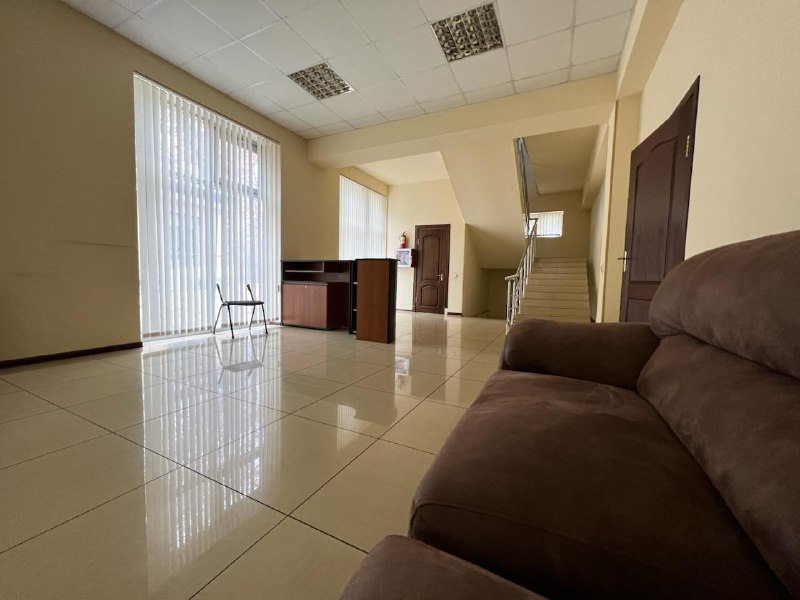
I had never had such an intense interview: they put me through the wringer for about two hours. I left the office (not a very presentable one, by the way) at around 20:00, slightly dazed by what had happened.
How I decided to work at Korzinka
At the time I had several options in different countries in the works. I spent a long time thinking about how to approach the analysis, and in the end, instead of complex scoring tables, I opened a note and poured everything I thought into it (screenshots of the note are in the channel, in Russian).
After the first round of filtering, the Korzinka offer turned out to be the most promising, even though at first glance the decision seemed counterintuitive to people I knew. I had no wish to “jump” between options and countries, so I decided to look a little deeper into the prospects in Uzbekistan.
Here are the factors I weighed when making the decision.
Why Uzbekistan
- Uzbekistan’s economy is doing well overall:
- the population is growing steadily;
- GDP and (if slowly) living standards follow population growth;
- the economy is becoming more liberal thanks to many market reforms;
- this leads to growing foreign investment;
- Internet penetration is about 83% (which is good for any online business);
- The average age of the population is about 30 (which potentially helps new technologies catch on quickly);
- Registration is relatively simple, and you can get a 3-year IT Visa. At the time there was a flood of news about tougher residence permit rules for Russians in Turkey, Kazakhstan and other places, so not needing visa runs or a year-long lease was a significant advantage.
Why Korzinka
- Korzinka is the market leader in its segment. And that’s while the segment is still undeveloped: modern retail accounts for only 10–15%, so the growth potential is huge;
- The team actively uses English, which would let me “level up” my English without stress;
- Experience in a new industry, in a new market, with a completely different culture. As Kostya once said, “the fact that people in Uzbekistan speak Russian shouldn’t mislead you”, stressing how different the cultures are;
- A wide range of opportunities and a high level of responsibility, since the project (in its new iteration) was only just getting started;
- The low-base effect would let me move fast on dopamine-driven motivation;
- A competitive salary.
Taking all the factors together, it looked like an opportunity like this (to grow a product tens or even hundreds of times over) doesn’t come along often in life, so I decided to take the risk, and the KPMG report on e‑commerce in Uzbekistan that came out six months later confirmed that I had made the right choice.
First published in my Telegram channel (in Russian) on 11 and 12 November 2024: t.me/raschet7/134 and t.me/raschet7/135.