Recently I shared the results (in Russian) my team and I achieved in the not-quite-finished first quarter of 2025.
I don’t want to give the misleading impression of a marathon of successes (that’s what LinkedIn is for), so I’ll say it openly: feats like these cost me a lot of energy.
Some days I only have the strength to take Tofs, my dog, for an evening walk and collapse on the sofa. I pick up the remote, put on YouTube — and… I can’t finish a single video because I fall asleep. The cycle can repeat for several days (sometimes weeks) in a row. It drives me mad (I want to switch out of work mode), but there’s nothing to be done — I have no energy left for anything but work.
There are more serious consequences too: if I’ve reached the point where I snap at colleagues and am irritable and toxic, I’ve already “failed” the task. In especially bad cases it can end in a sudden “you’re all ***********, I quit and I’m flying to Bali”. I believe that for a manager this is unacceptable irresponsibility: colleagues, employees and clients shouldn’t suffer because I can’t manage my own energy.
After making the same mistake a few times, I tried to build a system that helps me:
- not waste energy;
- notice the signs of exhaustion in time;
- recover quickly so I don’t fall apart on the way;
- take preventive measures to rule out risks.
Perhaps my experience will be useful to you.
Project management has the classic triangle: time, money, quality. At any given moment you can only have two of the three: fast and good but expensive; cheap and good but slow; and so on.
My team ships results fast and relatively well. But instead of money, we spend energy.
The word “energy” used to have an esoteric ring for me, and I looked down on anything written about it. That came from not understanding the point. I thought health, time and desire were all you need to work productively.
Then, at around 30, I realised that I sometimes find myself in situations where my check-up is fine, I have motivation (interesting projects, recognition, money), and I have enough time. But there’s no drive. Everything takes effort and goes slowly. Tasks seem to take a disproportionate amount of time.
A few caveats are important here, to cut off straight away what isn’t directly related to the topic (but is indirectly connected):
- We’re not talking about the work-life balance I wrote about earlier. To recall the key idea: “how much effort and time to put into work is everyone’s personal choice”. This isn’t about “I have far too much work and don’t want to live like this”, but about “I put in a lot of resources of my own free will, but sometimes I suddenly run out”;
- We won’t touch on “burnout” here either: it’s a complex, deep topic that deserves its own analysis;
- Physical exhaustion or illness is a matter for doctors, so we leave it out;
- Mental health problems (depressive disorders, for example) — see above.
From this you can put together a checklist, “Before tackling low energy”:
- I get a full check-up (at least once a year) to spot obvious health problems;
- I see a psychiatrist for a preventive check (sometimes you may not even suspect, say, a progressing depressive disorder);
- I look at how satisfied I am with my work (I discuss it with a therapist or a career consultant). I once suddenly realised that I had no interest at all in what I was doing, and the problem wasn’t my energy level in general but my motivation for that job in particular.
To repeat the idea from the start: managing my resources is my responsibility. Lack of energy, fatigue or a heavy workload shouldn’t be an excuse for destructive behaviour.
What helps me not waste energy
So I checked myself against the checklist and made sure that:
- I’m physically and mentally healthy (ironically, I managed to fall ill while writing this: I carried on through it, and paid for it with a longer recovery);
- I enjoy my work;
- my career is heading where it should;
- I’m not emotionally burnt out, and I want to spend a significant part of my time on work.
But my energy is a mess.
I divide energy into three types:
- Physical → “I can’t get out of bed”;
- Cognitive → “I’m slow today”;
- Emotional → “Everything annoys me, everyone gets on my nerves”.
Each type needs its own tools, but broadly I classify them like this:
- Energy-saving tools → “I don’t do anything unnecessary”;
- Energy-restoring tools:
- boosters → “Make it to the end at any cost” → raise energy in an emergency at the price of a later crash;
- supporting → “I’ll rest a bit and carry on” → soften the symptoms over a day or a week;
- systemic → “This thing recharges me” → work on the causes and in the long run.
Let’s start with saving energy. Even with a full charge, careless spending quickly leads to a deficit. Sometimes the most effective way to recover is simply to stop leaking.
Level 1. The basics
The points below may sound trivial, but there’s no point moving on without working through them: they affect all types of energy at once.
Poor or too little sleep. Sleep problems quickly affect attention, coordination, stamina, resistance to stress and so on. Simply “sleeping 8 hours” isn’t enough: duration ≠ effectiveness. To measure the quality of my sleep I use an Oura ring and regularly look at which parameters I can tweak. You can read more about fixing your sleep in Reminder’s guide (in Russian; paid, but worth it).
Not enough water. Losing 1–2% of body weight in water reduces the ability to concentrate (it’s been shown). The brain is 75% water, so a lack of fluid upsets the electrolyte balance, which harms nerve conduction. Less water → less blood flow to the brain → less oxygen and glucose.
Eating high-glycaemic-index food. Sweets, pastries, white bread and other high-GI foods cause sharp spikes in blood sugar, which makes your energy unstable. A brief high is followed by a slump — sluggishness, irritability, trouble concentrating. A steady glucose curve = feeling steady all day.
Important: it’s normal to have days of complete inactivity (they can happen even if you follow the “energy hygiene” rules above). Nobody can be consistently productive 365 days a year.
This simple truth only dawned on me four years ago. I remember the day well: I was working for Skyeng remotely, from a rented flat in St Petersburg. At about 2 pm I realised I couldn’t even move my arm: an energy crash had hit after an overdose of coffee.
I literally crawled away from the laptop and lay down on the bed. At that point I no longer cared about missed meetings and unfinished tasks. I was drained, so I accepted the situation calmly indifferently and lay there staring at the wall for four hours.
By the evening I felt a little better, but I decided not to open the laptop. The next day I went back to work, but I spent the following weekend shut in, playing through the expansions to the first Half-Life.
These days I try not to let things get that far. Even in hard weeks I’ve learned to plan so that the “battery” runs down by Friday evening, and I can lie around all weekend without hurting my work.
Saving cognitive energy
The best illustration of cognitive energy I’ve come across is Maxim Dorofeev’s concept of “thought fuel”. You can read about it in detail in his book “Jedi Techniques” or in this summary (both in Russian); here I’ll briefly retell the gist in my own words:
Mental energy, like any other, is a limited resource. We spend it when we solve a problem or make a decision. Ten small decisions (what to wear to work; what to order for lunch; where to spend the evening; whether to accept a colleague’s offer to grab a coffee) can equal one serious decision.
When a waiter asks, “What would you like: a main or starters? Fish or meat? Which side? Will you have dessert? What would you like to drink?”, you’ve already spent five units of thought fuel and may have deprived yourself of the chance to make one important work decision that day.
The concept is simple and clear, but I decided to tweak it a little: adapt it to my needs and make it more familiar to people in IT.
Computer systems have four types of memory:
- Cache: sits literally inside the processor. Extremely fast and extremely small (in capacity);
- RAM: fast and rewritable, but expensive, so there’s always a limited amount of it. Another feature of RAM is that its contents are “wiped” when the power goes off (as with cache);
- ROM: slower and not rewritable (it stores the BIOS, which helps start the computer);
- Flash (expandable with external drives): medium speed, rewritable, cheap, and you can use as much as you like (since it’s easy to plug in).
How does this map onto cognitive energy?
- Cache — the flicker of thoughts we aren’t always aware of. Background worries and pressure hanging over us (we haven’t replied to an important message, haven’t called about the car repair and so on);
- RAM — the task we’re working on right now (a document, a conversation, a meeting);
- ROM — memories, basic reactions, beliefs, values;
- Flash — any external data “storage”.
What do we do with all this?
- The cache needs regular “clearing” to get rid of micro-noise;
- RAM has to be freed up:
- offload data to Flash so you can come back to it later;
- “kill” processes completely (stop keeping a background task in your head and never return to it);
- There’s nothing we can do about ROM;
- Flash storage needs to be organised so that it’s roomy enough and convenient to use. If you have ten different “flash drives” (note apps), five SD cards (task trackers) and three more external HDDs (calendars), that’s no longer storage, it’s a dump.
Techniques for saving cognitive energy
1. Clearing the cache
For “clearing the cache” (flickering thoughts, background worries, other noise), meditation, aimless walks, a shower, monotonous work with your hands (I, for one, like cleaning my gadgets) and what I call “morning defragmentation” work great.
2. Offloading from RAM to Flash
For “offloading from RAM to Flash” (a specific thought that’s bothering me at the moment) I use:
- Notes — for thoughts and tasks (I wrote here about how I use Apple Notes);
- The calendar — for anything tied to a time (meetings, holidays, the doctor, a task with a deadline and so on);
- The Unread mark in messengers — for unfinished conversations, so I can come back to them later. True, this approach has a downside: I still haven’t worked through the birthday wishes from more than a month ago. All because I try to reply thoughtfully rather than just “ok”. That takes time, and there’s never enough of it.
3. Freeing RAM and killing unnecessary processes
For “freeing RAM and killing unnecessary processes” (so as not to load my head with unnecessary outside signals):
I minimise incoming information noise.
First I swapped my Apple Watch for a digital Casio, because I was tired of endless notifications. Then I bought a Kindle so I wouldn’t get distracted while reading. For my recent birthday I was given a monochrome iPod Classic 4th Gen, so I can listen to music while walking the dog without being distracted by messengers.
While I work, Do Not Disturb is on on my laptop, and my phone is always on silent. For many years now my desktops have had no widgets and no icons.
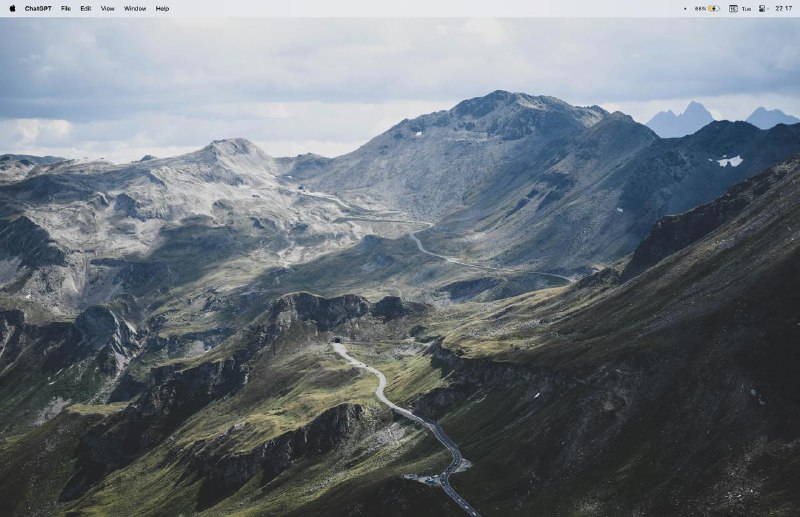
I wear noise-cancelling headphones, with an eight-hour ambient mix playing on YouTube (this one, for example, is what I’ve been writing my posts to lately).
For maximum focus I’ve started switching the screen to monochrome. After working like this for a couple of hours and then turning the colours back on, it feels as if dozens of people have started shouting at me at once.
I even chose a health tracker in the form of a ring, so as not to be distracted by yet another screen.
I hold regular “clean-up days”.
At one point I was impressed by the book “The Life-Changing Magic of Tidying Up” (link to the Russian edition). It inspired me so much that I began applying its ideas not only to things but to people, emotions and my digital space. The habit of tidying up my digital life then took root at Skyeng, where we regularly held “clean-up days”.
Every two weeks, for four hours, all the teams deleted outdated templates, mock-ups, documents, bookmarks, notes, calendar events, passwords and logins, articles in the internal wiki and so on. At the end of the day we presented the results at a demo and voted for a winner, who got a small prize.
I don’t make “unnecessary” decisions.
And on Saturdays I try to make no decisions at all. For example:
— Where shall we have breakfast today?
— What do you want for dinner?
— Will you pick up something tasty?
— Where shall we take the dog: the park or the mountains?
There’s one answer: “I completely trust your choice.”
Of course, you need to agree on this with your partner in advance and explain why it matters to you.
For the same reason (wanting to save thought fuel) I always ask for the clearest possible instructions: what to buy (a list in notes), where to buy it (a Yandex Maps link with opening hours), whom to call and so on. And in a café I sometimes ask the waiter to choose a dish for me. In short, wherever I can avoid making small decisions, I try not to make them.
First published in my Telegram channel (in Russian) on 31 March and 9, 13 and 15 April 2025: t.me/raschet7/160, t.me/raschet7/161, t.me/raschet7/163 and t.me/raschet7/164.