As a teenager I kept a written diary. Irregularly and half-heartedly, but still: I wrote my thoughts and feelings in ordinary school exercise books. Some 5–7 years ago, while sorting through old things, I came across those notes and was struck by the topics that occupied my mind back then (with age I’ve become much more practical).
Three months ago serious changes started happening in my personal life, and I realised that without a journal I simply wouldn’t cope with all the emotions and thoughts stewing inside me. Some things just needed to be “poured out onto paper”, others needed to be thought through properly. So I went back to journaling, but this time in Notion.
1. A calmer mind
The first thing the journal helped me with was stopping looping thoughts.
One by one, I unloaded the thoughts that kept coming back and wore me out mentally and emotionally, and then turned them over from every side, writing down everything that came to mind on the subject. I stopped when I realised there was nothing more to write. Later, when the thought came up again, I ran through the points I had recorded in the journal and asked myself: “Is there anything new I can get out of thinking about this?” Usually the answer was no, and the loop didn’t start.
2. Reflection
Over my years in IT I had turned my mind into such an algorithm that my ability to reflect long and deeply had started to wither.
Since reflection takes time and effort, I had to reinvent the way I kept the journal. Notion was firmly associated with projects, tasks and breaking things down. It was important for me to change the context so as not to trigger my “work” mode of thinking.
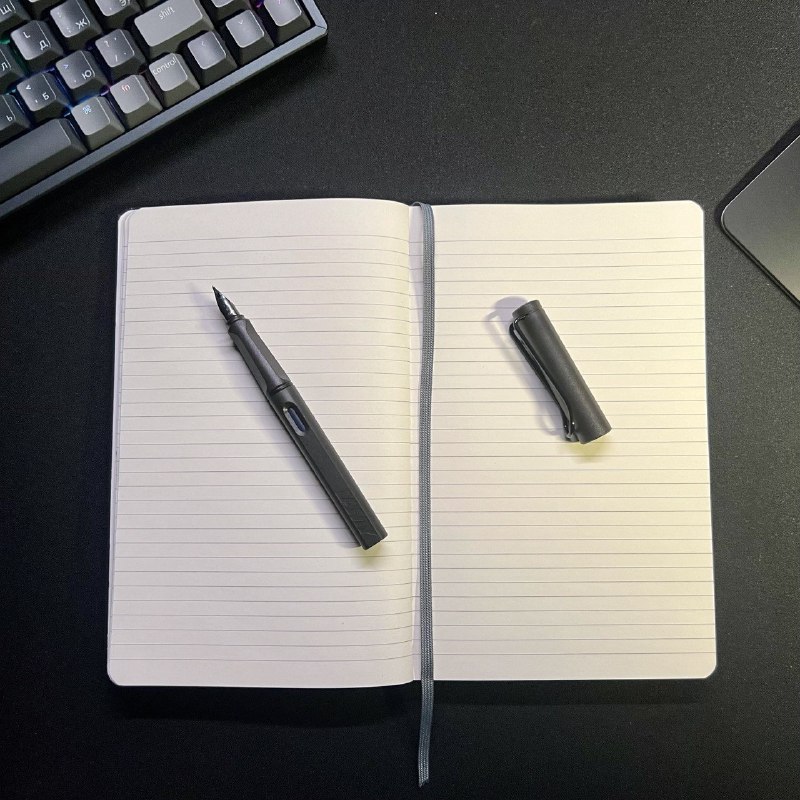
That’s how I came to a paper journal. First I bought the first notebook and pen I could find in a shop. After a couple of weeks I realised it was helping, which meant the habit had to stick. I decided to make it stick by enjoying the process, so I ordered a classic notebook and a fountain pen on Amazon.
All of this let me reflect on paper at length and with relish about what was happening to me, the people around me, the emotions I’d felt and so on.
3. Mindful goal-setting
Next I realised that the journal could help me set goals. I started asking myself questions like “Why am I doing this?” and “Will this make me happy?” about every big project in my life: a holiday in country X, buying a car, a career goal, moving to a new home and so on. Working on goals in the journal lets me “try on” reaching a goal, sort out priorities, and understand myself and my wishes better. Only after that do I move the projects that matter to me into Notion. And on the way to a goal, the journal helps me answer the question “Does this really matter to me right now?”.
These days I try to write at least a few times a week. Here are some of the “prompts” I give myself:
- What is worrying me (people, tasks, events)?
- Am I really paying attention to what matters to me right now? Am I giving enough time to conversations with my loved ones, to my dog, my health, my career?
- Small and big joys and wins of the day or week.
- Which habits do I want to pick up, and which ones don’t “stick”? Why?
- Reflection on topic X.
The nicest part is that a habit has clearly started to form: sometimes I feel a physical need to write. The need itself already brings relief — knowing there is a tool at hand that will help me.
Do you keep a journal? Digital or on paper? What do you use it for? Message me.
First published in my Telegram channel (in Russian) on 21 January 2024: t.me/raschet7/82.